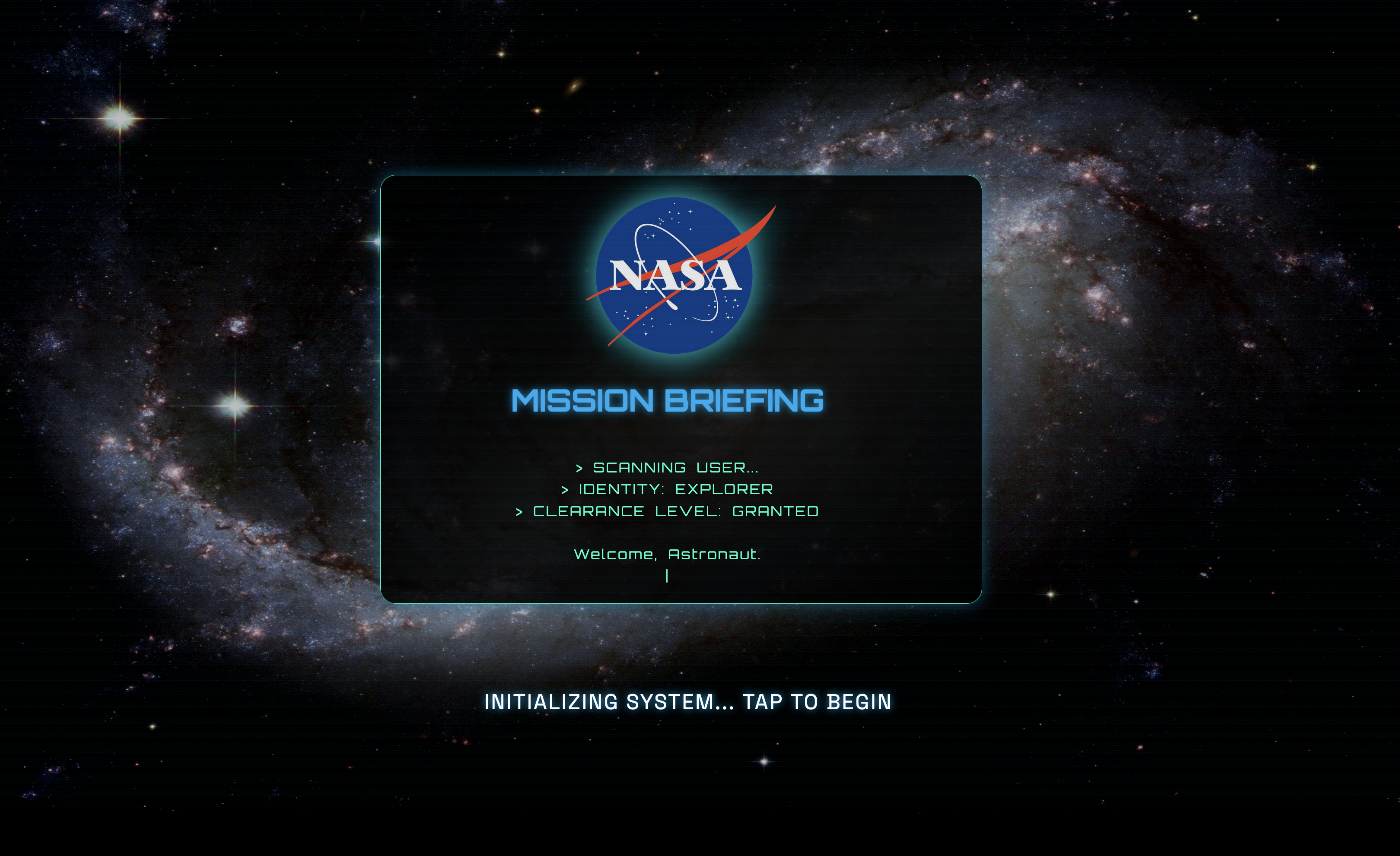
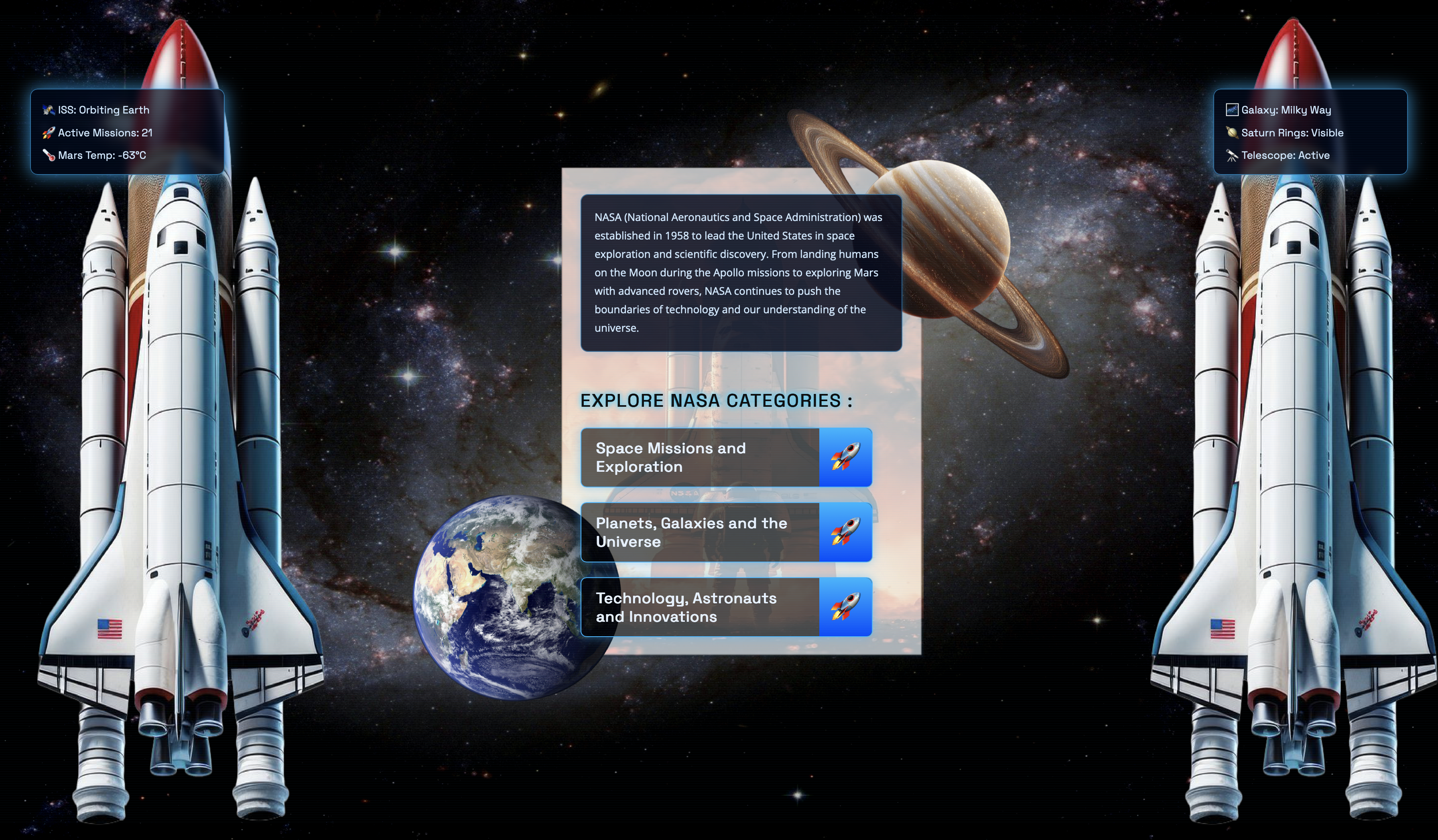
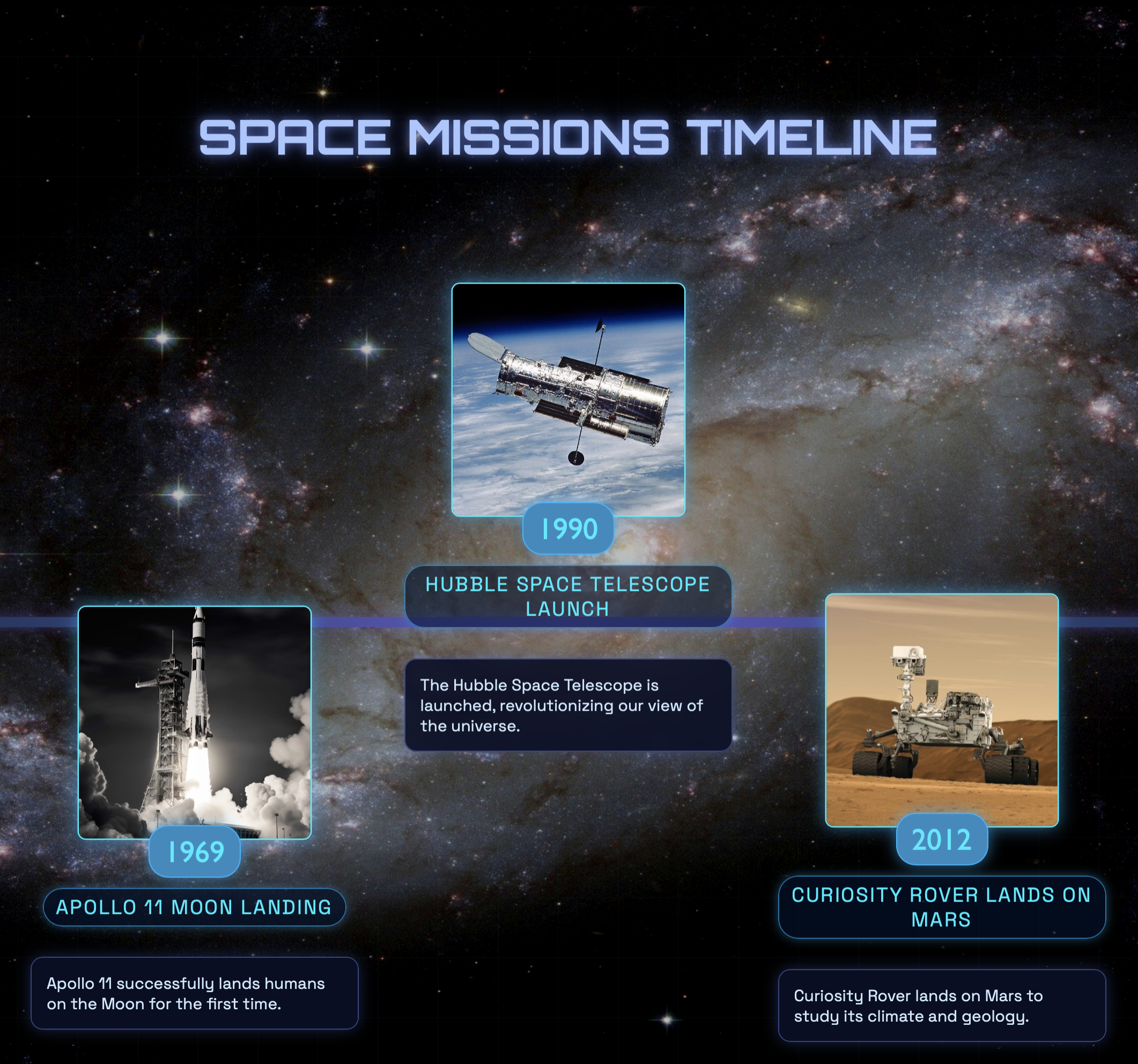
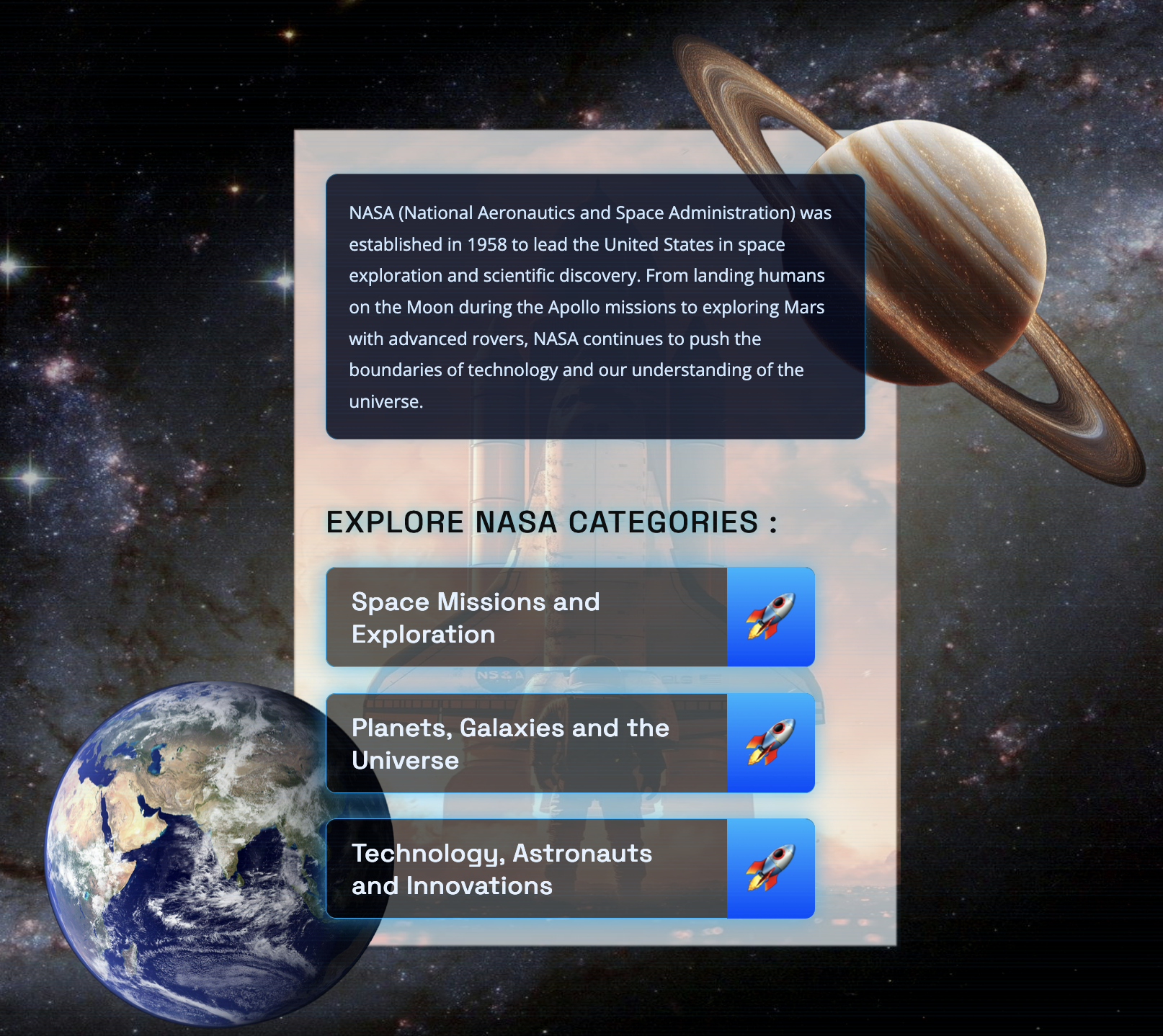
This project is an interactive NASA-inspired touchscreen kiosk designed to create an immersive space exploration experience. Users navigate through mission briefings, space timelines, and cosmic data interfaces using dynamic touch interactions and animated transitions. Developed using HTML, CSS, JavaScript, and GSAP, the project emphasizes intuitive navigation, motion design, and a futuristic UI system. The experience blends education and interaction, allowing users to explore space concepts in a visually engaging and meaningful way.
This project is an interactive NASA-inspired touchscreen kiosk designed to deliver an engaging and immersive space exploration experience. Traditional methods of presenting space-related information can often feel static and limit user interaction. This kiosk reimagines that experience by integrating dynamic, touch-based navigation across multiple interactive screens, including mission briefings, space timelines, and cosmic exploration modules. Users can explore key milestones, learn about planets and galaxies, and interact with content in a visually rich environment. The project focuses on intuitive user interaction, motion design, and a cohesive futuristic interface to enhance both engagement and learning.
The main challenge was to transform complex space-related information into an engaging and interactive experience. Designing multiple screens that felt cohesive while maintaining a consistent NASA-inspired visual identity required thoughtful planning. It was also important to ensure smooth transitions, intuitive touch interactions, and clear navigation so users could explore content without confusion.
Research showed that users are more engaged when learning experiences are interactive and visually immersive rather than static. Touch-based navigation, motion feedback, and clear information hierarchy play a crucial role in guiding users through content. Analysis of interactive kiosks and educational interfaces highlighted the importance of simplicity, responsiveness, and storytelling in creating meaningful user experiences.
The project began with research on NASA missions, space exploration concepts, and existing interactive kiosk systems. Once the content and structure were defined, the flow of the application was planned to ensure a logical and engaging user journey across multiple screens.
1. Content Organization : The content was divided into clear sections including mission briefings, space timelines, and cosmic exploration modules. This helped create a structured navigation system that allows users to move smoothly between different types of information.
2. Visual Design & Asset Creation : All visual assets were designed with a futuristic NASA-inspired theme using consistent typography, color palettes, and space imagery. The goal was to create a cohesive visual identity that enhances immersion and readability.
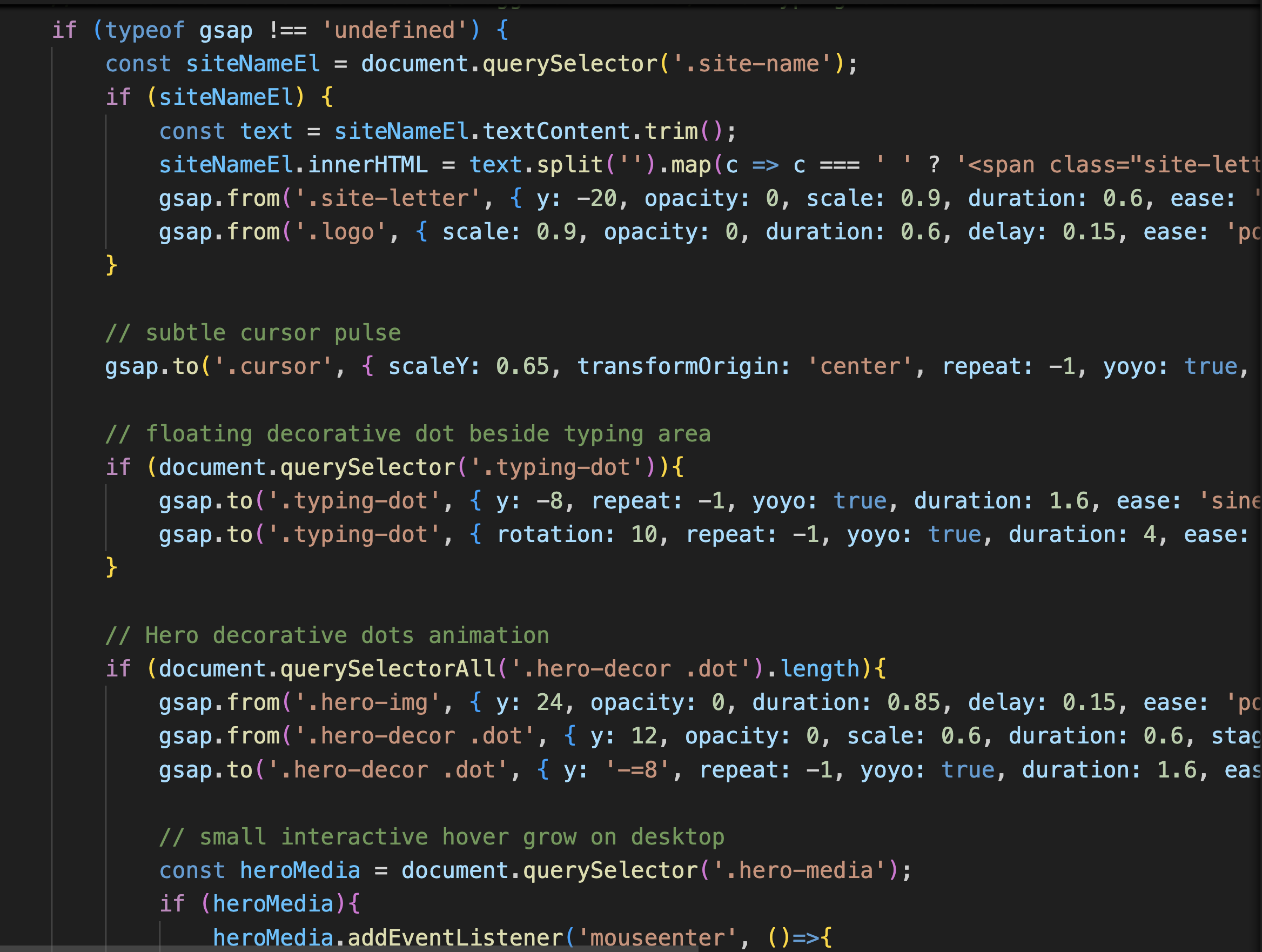
3. Development & Animation : The interface was built using HTML, CSS, and JavaScript, with GSAP used to create smooth transitions and engaging animations. Motion design was carefully implemented to guide user attention and improve interaction flow.
4. Interactivity & User Experience : Interactive elements such as buttons, navigation controls, and screen transitions were added to create an intuitive touch-based experience. The focus was on simplicity, responsiveness, and ensuring users can explore content effortlessly.
The final deliverables for this project include a fully functional interactive touchscreen kiosk prototype built using HTML, CSS, JavaScript, and GSAP. It features multiple interconnected screens with smooth transitions, immersive motion design, and intuitive touch-based navigation.